
Re-reading Shakespeare’s The Winter’s Tale! It’s taken us a while to get here, but act 4 scene 4 has a lot of what people love about this play.

Lots of folks will summarize The Winter’s Tale by saying the first half is the Leontes and Hermoine story, and the second half is the Perdita and Florizell story. But that’s not entirely true, because act 4 scene 4 is most of the Perdita stuff. It’s another super-long scene, basically its own play within a play, so we’ll be spending a couple of weeks here. Hope you like sheep.

After hearing a lot about Perdita and seeing her as a baby, it’s now years later and we get to meet her for real. She and Florizell, the prince of Bohemia, arrive on stage with the premise that they are dating in secret. We begin with Florizell heaping tons of praise on her. He says her common clothes cannot hide how she is like a goddess. He compares her to Flora, the Roman goddess of flowers and springtime. He’s saying all this not knowing that she’s the long-lost daughter of a king, but we the audience know it. He tells her that everyone else at the upcoming sheep-shearing fest will be like minor gods, and she will be queen of the gods.

Perdita tells Florizell that, because he’s the prince, he’s more likely to be the object of affection, even though he too is dressed plainly. This is all romantic in a youthful, playful way, which Shakespeare does so well. Then Florizell mentions that his falcon has flown over Perdita’s farm home. By all accounts, we’re meant to take this literally, that Florizell is a falconer. But I wonder if this could be interpreted as a metaphor for his and Perdita’s secret late-night rendezvous. (Wink-wink, nudge-nudge, hubba-hubba.)

Perdita gets less flirty and more serious, fearing that Florizell’s father the king might walk by and see them together. Florizell tells her not to worry about it by referencing more talk of ancient gods, specifically all the times that gods disguised themselves to interact with mortals. This is yet another unknowing reference to Perdita’s real background.
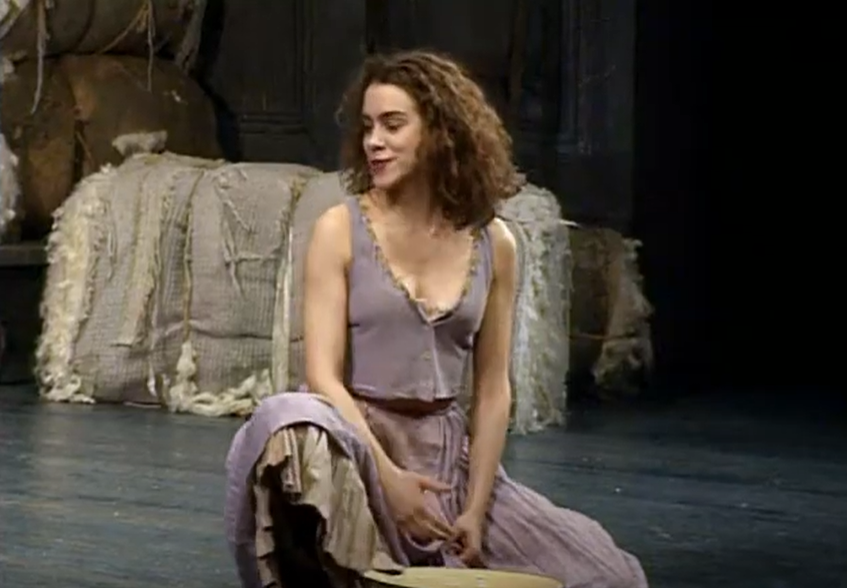
Perdita gets serious when she says his words won’t stand up against a resolution from the king. She says, “You must change this purpose or I my life.” The footnote in the Folger edition says that editors and scholars have for years debated the meaning of this line, so I won’t presume to have the definitive answer. My mere guess is that the line is more romantic than outright suicidal, a variation of saying, “I can’t live without you.” Florizell encourages her to squash such dark thoughts, and that he’d rather be with her than her father. He mentions “nuptials,” revealing that they are either secretly engaged, or have at least talked about marriage.

Throughout these blogs, I’ve been speculating a far-out epic fantasy version of the Winter’s Tale in which the Leontes’ people are demonic devel types and Polixenes and his people are heavenly angelic types. How would Perdita be portrayed in such an otherworldly setting? I imagine it’d be something like the Chinese blockbuster fantasy film Nezha and its many remakes and/or sequels, based on the classic novel Investiture of the Gods. Basically, a demon child and an angel child are switched at birth and grow up in each other’s worlds, confronting each other at the end. As a boy, title character Nezha has a fiery personality to go with his fiery powers, an outsider among the serene angels. Perdita has already been described as an attention-getter among her village, so I don’t see why she can’t just as fiery and wild as Nezha is.
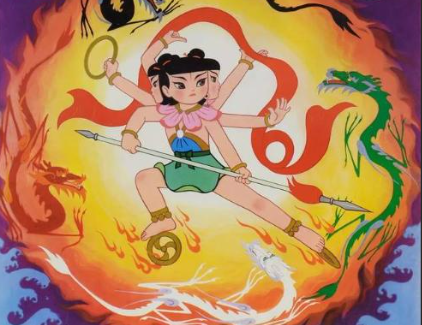
Florizell tells Perdita to be “red with mirth” as a group of people arrive. (More Nezha-like fire imagery!) That’s where we’ll pick things up next time.
Next: The daddy-daughter dance.
* * * *
Want more? Check out my ongoing serial, THE SUBTERKNIGHTS, on Kindle Vella. A man searches for his missing sister in a sprawling city full of far-out tech, strange creatures, and secret magic. It’s a sci-fi/fantasy hybrid full of action, romance, mystery, and laughs. The first ten episodes are FREE! Click here for a list of all my books and serials.



 macmcentire