
Re-reading Shakespeare’s The Winter’s Tale! A ton of story happens in act 5 scene 2, but we don’t see it happen.

You don’t want to know how many times I said, “Did I miss something?” when reading this scene. It’s all about describing major events and revelations that we the audience don’t see. We begin with Autolycus (the king of thieves!) pressing a gentleman of the court for information. The man describes the meeting between the kings, Leontes and Polixenes, and Perdita, Florizell, and Camillo. Everyone was moved to tears upon learning that Perdita is the long-lost princess. The gentleman could only watch this for a few seconds before being ushered out of the room for privacy.

Another gentleman, identified as Rogero but named only “Second Gentleman” in the script, walks up to add more information. He describes bonfires being lit throughout the city in celebration (so the meeting wasn’t all that private). He confirms that Leontes’ long-lost daughter has been found, and that the Oracle’s prophecy has been fulfilled. (Remember all that business with the Oracle?)
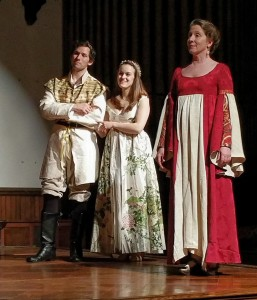
Then we get a third gentleman, identified as Paulina’s steward, who provides more information. He lays out the whole story of Antigonus’ death (by a bear!) and how the shepherd has the letters from Antigonus to prove that Perdita is in fact the princess. There’s another description of Antigonus’ ship being lost as sea. The ship is called “the bark,” which is an interesting detail.
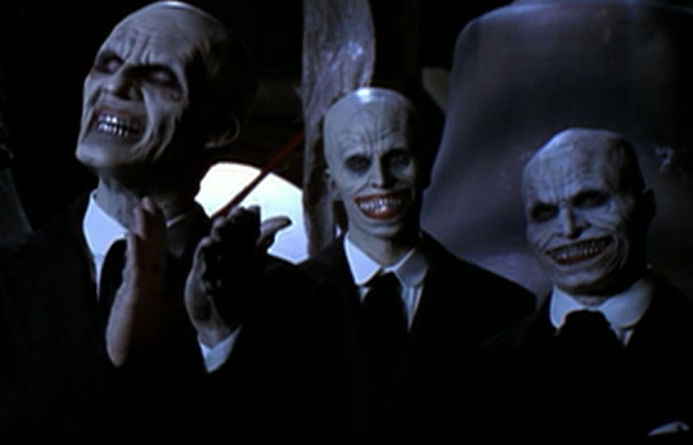
The third gentleman also catches us up with Paulina, saying her emotions were in battle (!) between sadness over learning the details of her husband’s death (by a bear!) and joy over seeing Perdita alive and well. This includes a lovely description of Paulina embracing Perdita and lifting the girl off her feet. He then describes Perdita experiencing various stages of sadness upon hearing of her mother Hermoine’s fate.

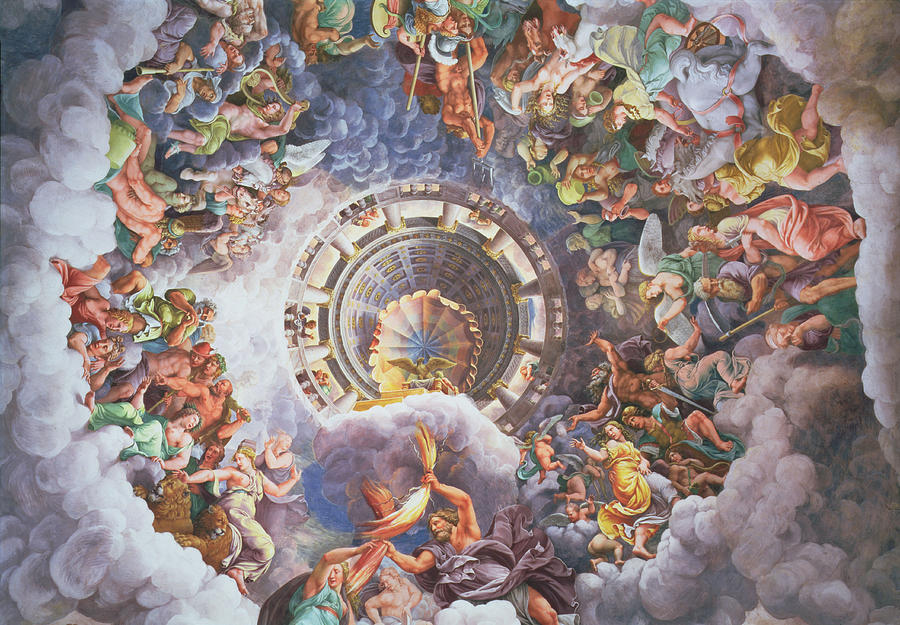
The third gentleman then says that Perdita wanted to see Hermoine’s statue. I believe this is our first reference to the statue, which is about to become the big set piece. He points out that the statue of Hermoine was made by the great artist Julio Romano. This was a real person, an important figure in the Italian Renaissance. Why Shakespeare made this specific reference has baffled scholars over the years, as this is a huge anachronism. The most common speculation is that Shakespeare included Romano’s name to curry favor with some royal and/or financier. Or maybe Shakespeare wanted to indicate in what style he wanted the statue to look like. We may never know. As far as the story goes, Romano’s work is often about the ancient myths, gods and goddesses and whatnot, foreshadowing the miracle (or is it?) we’re about to see.
Autolycus doesn’t much during all this, giving each actor a lot of leeway on how to react. The three gentlemen leave, and he has a short aside talking about making the voyage to Sicilia alongside the young lovers, not knowing the secret. Then the shepherd and his son enter, dressed in “rich clothing,” according to the stage direction. This is a chance for a big laugh, if the costumers can come up with something really outrageous for them. There’s a running joke where the shepherd’s son keeps using the phrase “gentleman born” over and over. That’s supposed to mean someone whose parents were both nobility, but he misunderstands this every time he says “gentleman born.” It’s not an easy joke to adapt for today’s audiences, so the actor would really have to push things to get laughs from this.

The shepherd’s son then describes another scene we didn’t see, in which the two kings and young lovers call the shepherd and the son their brother. Autolycus asks if they can give him an audience with Florizell. The son says he can convince Florizell that Autolycus is a “tall fellow of thy hands,” adding that Autolycus is not a drunk. This is repeated several times, making it another running gag. My books’ footnotes allege that “tall fellow of thy hands” means he’s good with swords and other weapons, so it appears that they’re presenting him to be some sort of bodyguard for the prince.
It’s nice to have some fun antics at the end of the scene, but the big question remains: Why are we hearing about all these big dramatic moments instead of seeing them play out on stage? We can only speculate. On one hand, it might be practical. This gives the other actors a chance to catch their breath before the finale, and/or it gives the crew some room to set up the complicated last scene. In terms of story, we don’t want the audience thinking the big reunion is the story’s climax while Hermoine is (literally!) waiting in the wings. In a more elaborate staging of the play, the actors could portray the reunion silently upstage while the gentlemen describe what happens. Similarly, a filmed version could show the reunions with the gentlemen providing voiceover.
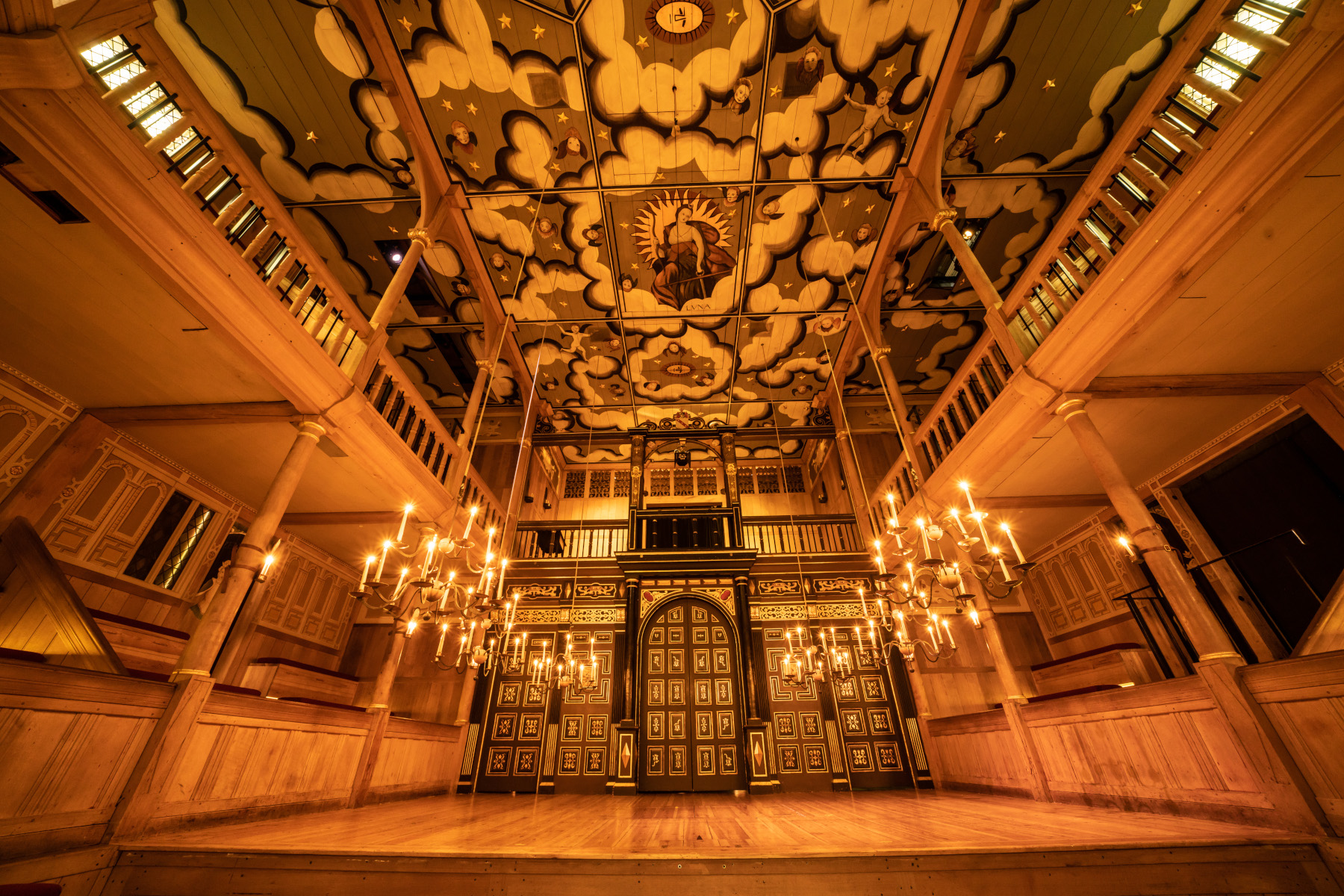
The scene ends with everyone marches off with another reference to seeing Hermoine’s statue, which is where it’s all going down.
Next: Heart of stone.
* * * *
Want more? Check out my novel MOM, I’M BULLETPROOF. It’s a comedic/romantic/dramatic superhero epic! https://www.amazon.com/dp/B08XPXBK14.



 macmcentire